
It was indisputable that the inception of Hollywood and the studio era, and the rise of Technicolour would be as enticing to audiences as honey to a bee. By the beginning of the 60’s however, it’s appeasing to the masses began to stifle, and ever-changing social values, and an increasing demand of a more inquisitive and literate spectator, would see the disestablishment of the old Hollywood studio form. The investment now of a new generation of film school educated directors such as Francis Ford Coppola and Brian De Palma, would be instrumental in being able to revitalize the industry, and the inception of a new wave of American Avant – Garde cinema labelled the ” New Hollywood”.
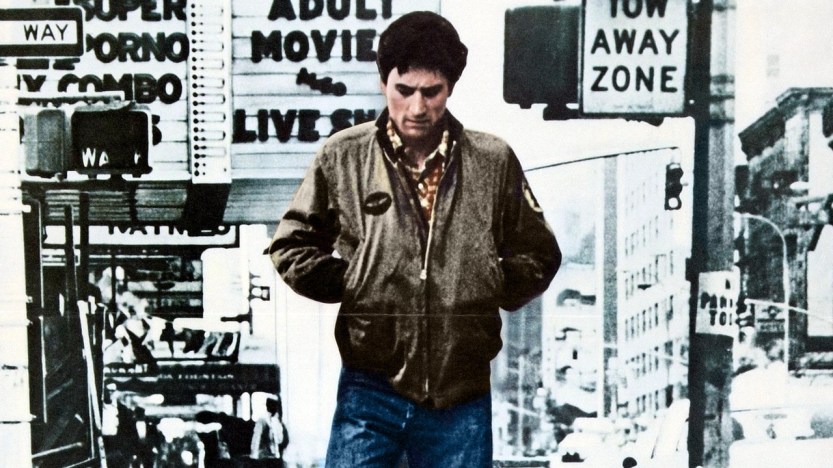
While in a similar vein to the documentary style of neo – realism, the new Hollywood stripped back the bravado and opulence of the Hollywood studio industry, and in doing so heightened its realism through the use of on location shooting and low budget production. The new Hollywood in addition adopted many similar self – reflexive stylistic techniques that were a common trajectory used in European new wave cinema, namely the fluid use of montage, jump cuts and intertextuality. The former exemplified in “Midnight Cowboy“, Dir John Schlesinger, 1969, by highlighting the sheer façade of New York high society. In juxtaposition to the seedy undercurrent and sub domain of urban decay that inhabits its two problematical leading characters Joe Buck and Ratso Rizzo. Joe Buck embodies the antiquated hero, a pastiche of the past, of a bygone era of the American frontier now endurably lost. The character of Ratso Rizzo in comparison is seemingly misunderstood , lame and frivolous. Like Travis Bickle, “Taxi Driver” Dir, Martin Scorsese, 1976, the archetype of the displaced hero is equally ambivalent and rebellious, operating well outside the established order and on the cusp of imploding. The discourse was further expounded by a complete rejection of the status quo, and a subversion of established societal values and ethics, most prevalent in the context of “The Graduate“, Dir Mike Nichols, 1967 social commentary and character study about a graduate student’s inadvertent act of transgression.
 " VISUAL SEMIOTICS " - Decoding the language of Cinema and Media. Published by Piers Ross , Freelance Film Blogger.